
- Home
- About us
- Blog
- Shop
- Brands
- ALL Brands List
- Analog Relax
- Antipodes Audio
- Audio Phase
- Audio Solutions
- AudioByte
- AudioCircle
- Audiomica Laboratory
- Canary Audio
- Canor Audio
- Chameleon Audio
- Dan D'agostino
- Eversolo
- Ferrum Audio
- Fezz Audio
- Glanz
- HiFiMAN
- HoloAudio
- LAB 12
- LAIV
- LampizatOr
- Magico
- Mega Acoustic
- Monrio Audio
- Origin Live
- Phasemation
- Pink Faun
- PLiXIR
- Qualiton
- Reed
- Remton
- Revival Audio
- Riviera Audio
- Rockna Audio
- Sbooster
- Shelter
- Sigma Acoustics
- Signal Projects
- SOtM Audio
- SPEC
- Takatsuki
- Takumi
- Tedeska
- Tellurium Q
- Trafomatic Audio
- Tsakiridis Devices
- Volumio
- Ypsilon
- Sales
- Second Hand Deals
- Account
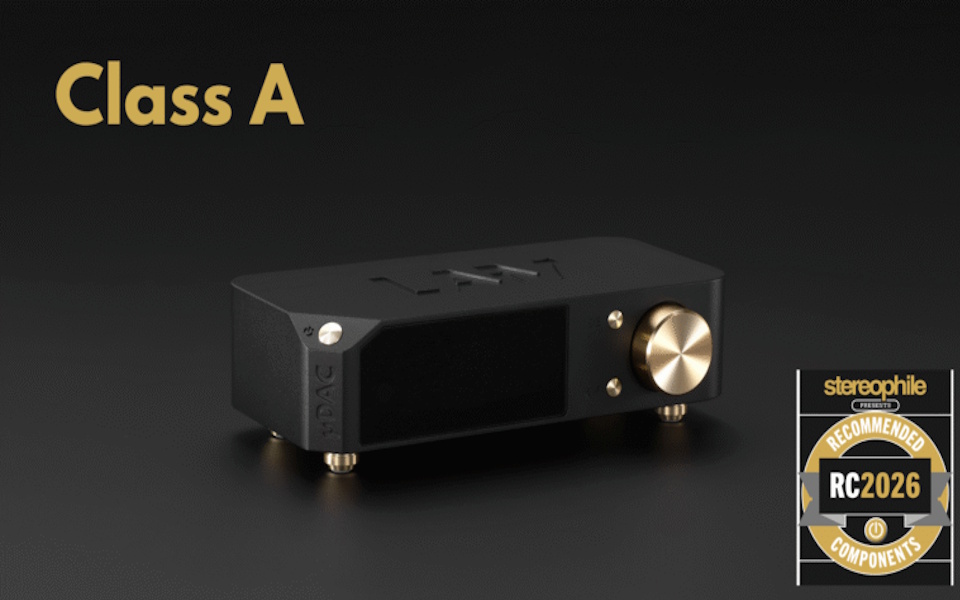
Laiv uDAC Stereophile Class A
Shortly after the Berlin wall came down and the Japanese stock market crashed, my day job was to demonstrate expensive audio products at hi-fi shows all over Europe and America. That entailed surviving on espresso and Toblerone while driving a vintage Mercedes at high speeds 12 hours per day. After four hours of sleep, I was doing 12-hour days of DJ work that entailed choosing the next perfect recording to keep the audience facing forward, mesmerized—a borderline impossible task. To avoid shame and rejection, I always kept a few 7″ 45s by groups like The Chambers Brothers or Booker T. and the M.G.’s to play when the vibe was sagging.
I believed then as I do now that the finest sound system is the one that lets each record sound the most like itself. Therefore, one of my policies was to play random CDs or LPs that visitors brought to the event, with a lighthearted warning: If the disc doesn’t please me and everybody else—if it doesn’t grab ’em and hold ’em in the first 15 seconds—it will be rejected and ejected. I made it clear that they should not take ejection personally.
When people left smiling, I was grateful. When they skulked out without nodding or making eye contact, I felt rejected. Sometimes I took it personally.
What I learned from spending 10-hour days switching between LPs and CDs was that the two formats could and should speak with the same amount of tone-truthfulness and drive—that’s basic accuracy—yet sound as different as possible from each other. Who wants analog that sounds digital? Or vice versa?
Unfortunately, digital with power and charisma has been thin on the ground until recently, when all of a sudden, seemingly out of nowhere, digital got big and strong and wild to listen to, with realistic presence and a supernatural transparency.
The first DAC that showed me this new high-intensity digital was Wadax Audio’s $166,420 Atlantis Reference, which I auditioned with the Reference Server ($68,800) and power supply ($52,700). Total cost: $287,920. That was an unforgettable, shake-my-head-in-wonder experience.
The second converter that showed me a radical new kind of digital was the full dCS Varèse Music System ($267,500). Its reproduction of files struck me as joltingly undigital, with crazy levels of detail and blatant immediacy—more audio-on-acid than anything I’d previously experienced.
Then some acorns started falling from those mighty oaks. I reviewed the CH Precision–infused Wattson Madison LE streamer-DAC ($4999). Just like the Atlantis and Varèse, it felt like another new form of digital experience. Then I reviewed Ideon Audio’s incredible eos, which, at $9999, is doing its best to go head-to-head with anything out there.
To me, all of these DACs felt new because they didn’t sound like the “old” digital I was familiar with. What those new DACs all had in common was punched-up immediacy and astonishing transparency.
Today I’ll be describing another “acorn” DAC, the least-expensive yet. LAiV Audio’s new µDAC is small, costs just $994 ($1049 as of January 1 2026), and is dancing at the same party as the above-mentioned DACs. It offers listeners a unique perspective on what quality digital can sound like.
Description
The LAiV Audio µDAC was shipped to me directly from Guangzhou, China, though your US orders will be fulfilled by the company’s fulfillment center in California. It arrived in an elegantly engineered box that measured 5″ × 9.5″ × 10.25″. The DAC inside measured just 1.6″ high × 6.6″ wide × 3.8″ deep and weighs only 1.5lb. It’s small and intelligently styled with a gold-detailed luxury look that seems intended for placement on a fancy desk or bureau top. It costs just $994 delivered, with shipping, tax, tariffs, and two-year warranty included ($1049 as of January 1 2026).
The LAiV Harmony µDAC uses the same discrete-resistor R-2R ladder network architecture as LAiV’s larger Harmony DAC ($2849 as of January 1 2026). It comes in a silver or black CNC-machined anodized-aluminum chassis with three gold buttons, a prominent gold knob, and four rubber-tipped gold-anodized aluminum footers. Its modest, self-dimming OLED display is fronted by tempered glass.
The back panel features four digital inputs: I2S over HDMI, coax S/PDIF, optical, and USB Type-B. The only output choice is balanced XLR, which arises from a discrete class-A output buffer. Inside the box, accessible via menu, are a few setup choices including absolute phase, oversampling and NOS, and display brightness. I left the µDAC on all the time but kept the OLED display dark except when I was using the super-simple menu.
Setup
The best thing about these smart new FPGA/R-2R DACs I’ve been reviewing is that you don’t need a team of men in lab coats, or an owner’s manual, or even a menu to get them playing. I only needed to look at the back and see which digital inputs matched the cables from my digital sources.
I used AudioQuest Cinnamon digital cables for both coax from the TEAC VRDS 701T transport (S/PDIF) and USB from my Mac mini. The DAC has only balanced outputs; I used AudioQuest Black Beauty wires to connect the µDAC to the Linear Tube Audio Z10e integrated amplifier. The LTA amp, in turn, was connected with Cardas Clear Beyond speaker cables to Voxativ Hagen2 full-range speakers.
I didn’t need a manual to fire up the LAiV µDAC and play music, but I did need the stiff, glossy cardboard startup guide, which showed me how to set absolute phase and choose between OS and NOS. That glossy card contains QR codes that you can scan to access the owner’s manual, warranty terms, and warranty registration.
LAiV’s fancy RCX remote, which comes standard with their larger $2700 Harmony DAC, is a $194 option with the desk-friendly µDAC. From its backpackable little box and its simple-as-pie menu, every detail of this classy-looking, easy-to-operate machine appears to have been thoroughly considered. Except the price, nothing about LAiV’s µDAC suggests that it’s a budget product.Listening to NOS
The closest I’ve gotten to seeing the mechanics of the cosmos exposed was while listening to Beethoven: The Complete Piano Sonatas performed by Artur Schnabel. Recorded between 1932 and 1935 in Abbey Road Studios, London No.3 (EMI 4-CDs CHS 7 63765 2), this set was painstakingly transferred from 78s to four CDs and digitally remastered, with audio restoration carried out in 1991, also at Abbey Road Studios, by Keith Hardwick.
In terms of record labels making natural-sounding digital recordings, 1991 was not a great year, but as one Beethoven sonata passed into the next, the LAiV µDAC in NOS mode let me admire the care, respect, and cleverness lavished on these 78-to-PCM transfers.
As a note for cultural reference, the original box set released in 1939 consisted of 15 bulky, heavy 78rpm discs and cost $200. In 1939, Europe was at war, and America was in an economic depression. A nice new Ford cost around $700.
With the LAiV µDAC, the physicality and tone character of the original electric recordings somehow made it through the wormhole to digital. If you’ve ever experienced a properly traced 78rpm disc from the electric era, you know how high its level of you-are-there realism can be. LAiV’s µDAC managed to transmit some of that 78rpm realism with only a hint of muffling.
The LAiV’s clarity encouraged mind melding with Beethoven and Schnabel. The piano sound, especially from Schnabel’s left hand, had a seductive weight and sensuality of tone that made it easy to appreciate low-level shifts in tempo.When people ask what religion I practice, I say, “The same one as Blind Willie Johnson.” I believe what they tell me in mountain gospel and old-time religion, which aims to save souls by faith in Jesus and warn parishioners about the wages of sin. Meanwhile, the bluegrass and country blues I favor features poetic tales of chain gangs, sugar mamas, libidinous acts, and murderous jealousy. However …
… after all that booze and suffering, I need some classical music to freshen my thoughts and direct my attention skyward toward the workings of the cosmos. Toward Beethoven, who demonstrates how a simple sonata can provoke our highest natures. With that rare talent, Beethoven created a foundation for the music of the rest of the 19th century.
Working 100 years later, Béla Bartók showed the modern industrial world the beauty of pure invention. In all forms of creative work, in art, science, and engineering, pure invention is what every practitioner strives for.